
Author

Wendy

Browsing

Turns out, maintaining a 55-pound weight loss – after age 50 — isn’t as easy as you might think.

Especially at the December holidays.

I love a tasty buzz as much as the next girl, but at the same time I don’t want to drink what are essentially boozy desserts and run screaming from my scale on January one.

Thing is, years ago I lost 55 pounds (by the time I turned 42). And I have zero interest in gaining and then re-losing that weight all over again.

So, behold the alcoholic calories that I rely on every November and December.

But first, a few tips:

1) Vodka has fewer calories than any other alcohol at about 100 calories for 1.5 ounces.

2) Don’t partake of high calorie meals or drinks without first taming your appetite. In other words, Eating Before You Eat or drink is a smart idea. Sip a cup or two of Trader Joe’s hot butternut squash soup, eat an apple with a teaspoon of peanut butter, or even have a small banana. Being hungry leads to goofball food and drink choices.

3) Decide in advance to keep your drink limit to two. No matter how low the calories, these sweethearts still add up.

On with the show.

Hot Chocolate with Rum.

Don’t be scared of making your own low calorie hot chocolate drink – this is totally do-able.

  • 8 ounces chocolate almond milk (the 30-calorie almond milk if it’s in your store).
  • 2 teaspoons cocoa powder.
  • 1 TBL syrup or 1/8 teaspoon stevia powder or 3-4 drops of liquid stevia.
  • A moderate pour of rum 1 oz (30 ml) per cup of hot chocolate. (One ounce is 1/8 of a cup)

Heat your almond milk on the stove stirring continuously (burnt milk is not fun).

Once boiled, add the cocoa powder and syrup to your hot chocolate.

Finish up with 1.5 of vodka or one ounce of rum (64 calories).

For fun, I squirt a bit of whipped cream on top and add chocolate sprinkles (because I’m five).

Santa Clausmopolitan.

Forget for a second that this is the cutest holiday drink ever, it’s also – if done right — seriously low in calories too.

Begin creating your Santa Clausmopolitan by ignoring the recipes that say to rim your glass with a lime wedge and then dip in sanding sugar.

Why? Because sugar is very high in sugar.

But if you’re looking for super-pretty rim the glass in sugar!!

The Clausmopolitan I drink throughout holiday season involves vodka, low-calorie cranberry juice (pink emphasis mine), a splash of triple sec (high in calories so a dribble is best), fresh lime juice and fresh cranberries.

Chocolate Peppermint Patty.

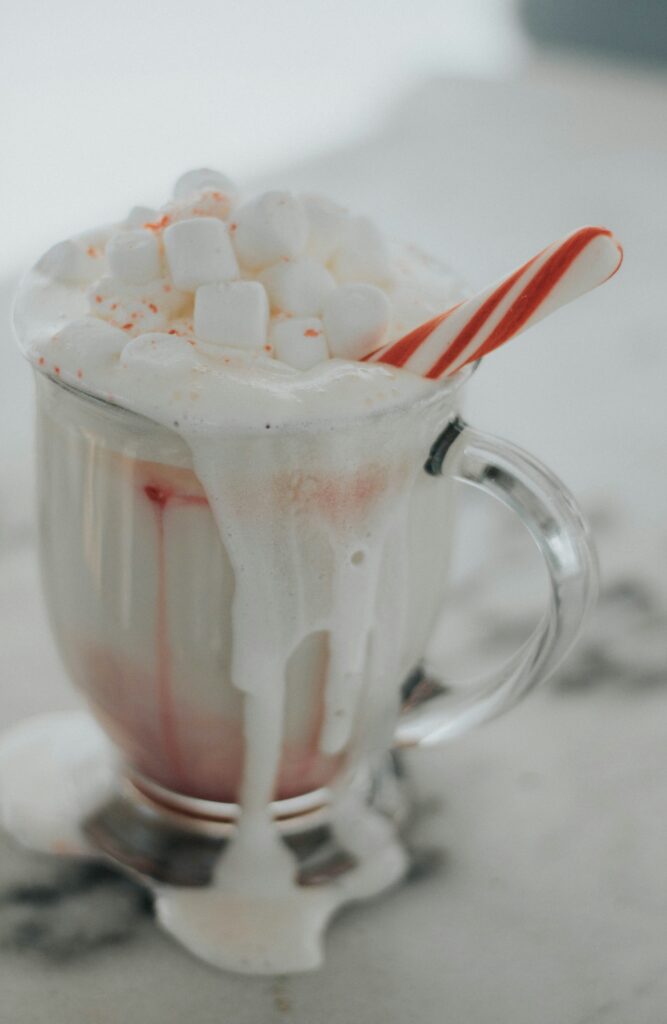
This tasty drink is my very own creation. Did you know that you can buy chocolate almond milk and that it’s only about 100 calories for a full cup? (Somebody upstairs loves us.) Add one ounce vodka (about 75 calories) to your chocolate almond milk, a drop or two of mint extract, and ice. Yum.

Low Calorie Eggnog.

My darling grandma – who rarely drank – always said yes to a cup of egg nog laced with bourbon. As I got older I realized that the quintessential holiday drink held about a bajillion calories per innocent-looking, festive cup.

But then – cue angels singing on high – I stumbled upon the nut-nog market that sent the high calorie egg nogs packing!

Check out these sweet little numbers:

  • I love the Trader Joe’s nog (in the cold section by the yogurts) with it’s insanely low 50 calories for a half cup.
  • The Blue Diamond Almond milk Nog is also low at 60 calories for a half cup. (I serve this one to company.)
  • The Silk nog’s soymilk comes in at 80 calories.
  • The So Delicious coconut milk holiday nog clocks in at 90 calories for a half cup.

Just add bourbon (100 cals for 1.5 ounces) and a light sprinkle of nutmeg to create a boozy holiday adult drink.

Champagne.

Many years ago I had the best glass of champagne of my life at a la-de-da resort in Southern California. Ever since I order dry champagne as my standard drink year-round that boasts just 65 calories for four ounces (think: half cup). Sweet champagne jumps to just under 100 calories for four ounces which is why I stick with dry.

Skinny-Girl Cocktails.

I should tell you right off the bat that the Skinny-Girl drinks come in rich-girl prices. I love the Skinny-Girl low calorie margaritas, Skinny-Girl also has pina coloda, mojito and several other flavors. But the good news is that other brands have gotten in on the reduced calorie drink game too (like Jose Cuervo). So shop around for the best prices in your area.

The Simple Vodka Soda.

Pick your favorite low calorie soda and add 1.5 ounces of vodka. Bada boom.

The Vodka Martini.

Vodka, vermouth (105 calories for three ounces), and lemon peel.

  • 2 1/2 ounces vodka
  • 1/2 ounce dry vermouth
  • 1 dash orange bitters
  • Garnish: lemon twist
  • For looks, add an olive-skewer

Mix with ice until chilled.

Hot Chocolate with Rum.

Don’t be scared of making your own low calorie hot chocolate – this is totally do-able.

  • 8 ounces chocolate almond milk (the 30-calorie almond milk if it’s in your store).
  • 2 teaspoons cocoa powder.
  • 1/8 teaspoon stevia powder or 3-4 drops of liquid stevia.

Heat your almond milk on the stove stirring continuously (burnt milk is not fun).

Once boiled, add the rest of the ingredients to your hot chocolate.

Finish up with 1.5 of vodka or one ounce of rum (64 calories).

For fun, I squirt a bit of whipped cream on top and add chocolate sprinkles (because I’m five).

And my work here is done!

Have a wonderful, low-calorie December!! And remember we eat to live – we don’t live to eat (mostly anyway).

If you have an awesome boozy drink to share: clue me in today!!

♥, Wendy

P.S. Are you new to the Inspired Eater? Welcome!! This blog won’t make much sense until you first read the Aunt Bea post (and you’ll find Aunt Bea on this page to the right under my short bio). On your cell you’ll see it immediately following the first post. After you enter your email address, the Aunt Bea article will be sent to your email’s inbox. If it’s not there, you might check the spam folder. And always feel free to email me at Wendy@TheInspiredEater.com and I’ll get Aunt Bea right to you!

I’ve been asked if I could include something like Buy me a Coffee on the Inspired Eater. So if you feel up to sending a coffee, I am a devotee. You’ll find the coffee “button” to your right. And, as always, thank you so much for reading the Inspired Eater. ♥♥♥

Hello Thrivers!

This post is from the past but updated. I love the inherent message about you and I shaping December rather than allowing December to shape us.

As I explain every holiday season, December is not the time to focus on weight loss, but it is the perfect time to “hold” your weight throughout the thirty-one days. Remember beating yourself up is the polar opposite of what creates a lifetime weight loss. (I’ve tried both ways and only one works so be sweet with yourself.)

Let’s go!

I live in Atlanta where it’s hot in July. My sister lives in Arizona where it also gets into the billions every summer. My grandma was in Southern California.

  • I call Atlanta’s heat, “humid.”
  • My sister calls Tucson’s heat, “dry.”
  • My LA-suburb grandma called the heat she lived in “muggy.”

When I tell you that it’s “blazing” or “freezing” outside, you immediately know what I mean.

Naming things makes them real and helps us talk about them with each other without calling concepts or items “the thingy.” We need to give “the thing” a real name.

Which leads to my point, we don’t have enough words for smart eating, and that needs to change.

Today, we’re talking about what I call “intentional eating.”

When I’ve strayed off the Smart Eating Path — because of course I do — and know that I’m too engaged in discovering which brand of ice cream has the best sale, one of the ways I rein myself in is with smart self-talk. I ask myself, “are you ready to get back to intentional-eating or do you want to continue going Cookie Monster on the kitchen?”

Asking myself this question is powerful because it floods my brain with everything that “intentional-eating” means to me including:

  • having my smart foods on hand in the kitchen
  • going everywhere with my cold-tote packed in smart snacks
  • eating an early dinner at 6 p.m. and going to bed around 8 p.m. with a delicious book-dessert
  • using the very effective “drip, drip, drip” method that I featured here.
  • creating an “intentional eating list” (I tape on inside of cupboard) that will whisk me out of the doldrums and back to the smart food that I love. At that, I remember, “this is doable, this is doable, this really is doable.”

Your Takeaway

The next time you’ve overeaten — because you and I both will — and want to get back onto the Smart Eating Path, read your intentional eating list and gently guide yourself back to where you most want to be.

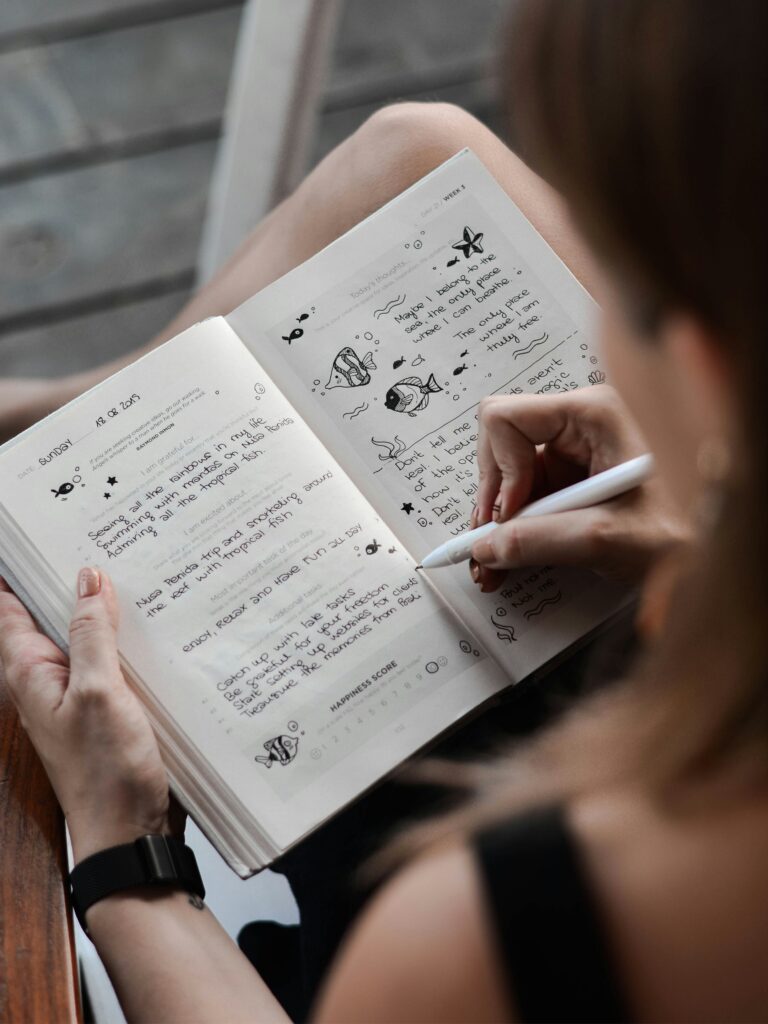
Our journal-writing prompt pearl! Write to these questions:

  • Write an intentional eating list for yourself. Tape in Cupboard.
  • What is the hardest part of staying on the smart eating plan?
  • What’s the best part about smart eating?
  • Do I take seriously that when I’m craving some type of food-porn, my body is really crying out for smart food?
  • When I overeat or make an impulsive choice, how do I usually respond to myself? How can I respond to myself without judgment?
  • How do I talk to myself when I’m struggling with food?
  • What kind of self-talk would I most love to instill inside of me?
  • Chosen thought: “Yes, Mom and Dad produced a beautiful Christmas, but I need to remember that they also had a strict rule: they gave gifts on birthdays or at Christmas only. Otherwise, there were never gifts (other than back-to-school items in August). There was also one giant gift at each Christmas like a puppy or a bike. Because The Scarfer and I essentially get my sons what they need/want throughout the year, I simply can’t pull off an over-the-top grand event for the holidays.
  • Feeling: Empathetic towards myself.
  • Action: I’ve come to realize that of course I can’t do lavish gifts at Christmas-time if I also give my sons items throughout the year.
  • Result: Happy to report that these days, my Decembers are way more chill.

Cold outside? This read is like a mug of hot chocolate. Snuggle up with your fur-kid and Winter Solstice by Rosamunde Pilcher. You might remember her as the author of The Shell Seekers. In Winter Solstice you’ll find cozy Cornwall, England, warm hearts, and family drama that makes it an ideal book-dessert for curling up and forgetting the world for a while. Plus it has a fun Christmas theme.

“The most important thing in life is to stop saying ‘I wish’ and start saying ‘I will’. Consider nothing impossible then treat possibilities as probabilities.”

Charles Dickens

Okay, no presure but we’re now 24 days from Christmas Day. If you’re buying for kids, check out the Lego Christmas tree and Lego Santa on his sleigh with the reindeer. I wish my kids were still at the cute Lego stage. A couple of years back I gave each of them (so they can take into their adult lives) The Complete Calvin and Hobbes Hardcover Box Set or they also have a paperback box set. Who doesn’t love loves Calvin and his tiger!

I would love a follow Instagram or Facebook

Let’s do this together: live the holidays for January-You!

I’m not shy about smart eating. I engage with this part of my life with total seriousness, but I have a little fun with it too.

When I face a group in any type of get-together, my plan is to get-to serving everyone else. In other words, staying busy and active is a huge part of how I navigate difficult holiday meals. If the party isn’t at my house, I work to help the hostess by assigning myself a job to avoid joining the “stretchy pants crowd.” Hey, the way I see it, it’s every eater for himself. If family and friends can’t resist the bounty, that’s between Thanksgiving-them and January-jeans-cutting-off-their-airway-them.

So along with staying helpful at the holidays, here’s how I roll from the U.S. Thanksgiving to January first:

  • In the morning of a holiday event, I create a contract with myself that identifies the Obstacles of My Day and I write specifically about how I’ll soar over each one.
  • As I’ve said, when my nearest and dearest collect, I feed the five million calories to everyone else while I load my own plate with the healthiest food available. Worst-case scenario I eat the nutrition-dense sweet potato casserole I brought from home. I’m never terribly hungry in the first place because I also ate out of my cold-tote on the drive over.
  • A  cousin to staying busy during the get-together, is when I’m the hostess I bundle up the guests with beautifully packed food that wasn’t eaten at dinner (I mean, who doesn’t love Thanksgiving leftovers?).
  • In the past, I’ve said that attempting to lose weight in November and December is just plain being mean to ourselves and I still maintain my stance. I encourage you to use the holiday season for your highest good. Don’t push yourself to lose weight during November and December, instead maintain (I call it “holding”) through the season.

Giving ourself ample time to “hold” our weight in place is one secret sauce to nourishing our ultimate plan (a lifetime weight loss). Our mind and body need the time to acclimate to our new normal. I think one reason diets of old didn’t work is that we were always encouraged to lose in a linear fashion. Plateaus were seen as negative. Nobody realized that “holding” our weight in place for a month or more helps every part of us adjust to the new number.

  • As I navigate the season, I keep a strong question with me at all times. When I see the variety of pies at Thanksgiving I ask myself, “Would I rather eat pie and trigger myself into eating my way through the holidays and wake up totally annoyed with myself in January? Or would I rather stick with my smart eating plan now and forgo most of the treats – not all, but most — and be thrilled to wake up in January feeling like I slayed it?” As you know, I run with the latter.
  • So let’s say that you’re going to chow on Thanksgiving, end of story. Okay, to that I say “eat before you eat,” at the meal don’t overeat to the point of being stuffed, and if you’re still wanting to overdo it on the fudge get busy with everyone else: take a walk, work a puzzle, or play a new game (this is the one I bought for Thanksgiving this year. It came highly recommended by creator Tim Ferriss and is called Exploding Kittens Coyote. Don’t let the name throw you. It has nothing to do with hurting animals).

I carefully guard my strong habits all the holiday season long. Adhering to my plan of eating “smart and sane” throughout the holidays means I’ll wake up on January one feeling thankful to Thanksgiving-me who didn’t let herself get triggered into ruining our long game plan.

  • What if Thanksgiving wasn’t about food, but about protecting January-you?
  • What tends to throw me off during a holiday meal? What can I do differently this time?
  • What tiny win can I commit to that will make me feel proud of myself tonight?
  • How will I “eat before I eat” if I’m the hostess. If I’m traveling to the big day what will I pack in my cold-tote?

Sequencing is taken directly from Cognitive Behavioral Therapy (CBT). The purpose of sequences is to help us move from reacting to circumstances to responding. I encourage you to do a sequence a day in your journal. Powerful stuff. Apply to your own life.

  • Situation (be super concrete): Diane, 52, lives solo now that her last kid graduated college.
  • Initial thought: “I’ve spent years dreading what is now a reality. The house is too silent and the quiet evenings seem endless.”
  • Feeling: She misses being needed. She misses the chaos and fun of kids.
  • Action: She mopes around assuming that her best years are behind her.
  • Result: She stops caring for her home and it clutters up quickly. When a kid is coming to visit, she has to race at maximum speed to get the house in shape first. After her adult kid is gone she gets depressed again.
  • Situation (be super concrete): Diane, 62, lives solo now that her last kid graduates college.
  • Chosen thought: Diane tells herself that, “Being sad is a normal part of kids growing up. I’m normal and my sadness is normal. Crying at times is totally acceptable. Now is also the time to be the author of my own life and write this new chapter.”
  • Feeling: Supported, understood, and optimistic.
  • Action: She journal-writes about her greatest passions in life. She writes about her favorite things throughout the coming months.
  • Result: Diane gets the house in shape for the coming Christmas (when the kids are coming home). She volunteers at her favorite thrift store (benefits rescue animals), joins a Meet Up group with people her age, delivers homemade chocolate chip cookies to her town’s police and fire department (“they’re so appreciative”) and cruises solo always with a great book.

This extraordinary story is a book-dessert of the highest order. Left to Tell: Discovering God Amidst the Rwandan Holocaust by Immaculee Ilibagiza. The book chronicles a young woman’s – Immaculee’s — personal survival story during the Rwandan genocide.

After her family is killed by Hutu extremists, she hides in a small bathroom (roughly 3×4 feet) for 91 days, along with seven other women, relying on prayer and inner strength to survive.

I’m so, so glad I read Left to Tell. I love learning about a region I’d known nothing about from a person who actually lived through this (terrible) time in her country’s history.

I stayed up too late reading. Phenomenal book-dessert. 

In essence, if we want to direct our lives, we must take control of our consistent actions. It’s not what we do once in a while that shapes our lives, but what we do consistently.

Tony Robbins

The holidays are roaring towards us and if you’re like me — always on the hunt for unique — affordable gift ideas — I thought you might like to see what I’ve discovered so far: I’m giving books like this Charles Dickens collection to one son and to everyone a body wash scent that matches each person’s personality from the Philosophy collection (like cinnamon buns, vanilla birthday cake and raspberry sorbet). Last year this advent calendar of little jams was a five-star hit.

Have a well planned week everyone!

Hi Everyone!

No need to panic but we’re 38 days away from Christmas! In pearl four I list five-star amazing gifts for kids.

Shall we?

There was a time when my own self-talk was in the toilet and it wasn’t until a friend called herself “fat and ugly” that I realized how far my own positive self-talk had come. Prior to being in therapy and later becoming a therapist, I was once abusive internally to myself.

And yes, that’s how I think of it: we’re abusing our own self when we engage in such a hateful and demeaning way deep inside.

My friend had a weight issue that bothered her. I’d seen her get thin and go back to heavy a couple of times and I never once thought of her as “fat and ugly.” My friend is a highly educated woman and can work in a number of fields given her skills and degrees are numerous; she volunteers in cat rescue and is a fabulous mom to three engaged, curious, sweet young men.

Do you see my point? Who she really is has nothing to do with what her skin-suit looks like.

Let’s take a lesson from Taylor Swift’s playbook on positive self-talk and how she has her own back.

I know that most of us grew up in the Elvis, David Cassidy, Eagles eras, but watching the back story and rise of Taylor Swift has been nothing short of astonishing. Her politics and skimpy outfits aside, who in the world can see their life trajectory as a young girl? I mean, how did she learn to write such beautiful lyrics? And then get her parents to move to a new state?

Positive self-talk. Taylor Swift uses it in spades. Look how she cheerleads herself:

TS: Before a concert. “They’re not going to throw things at you. It’s going to be OK, it’s going to be OK.” This is what Taylor tells herself before every performance. It falls into “what’s the worst that can happen?” category.

For our purposes: we can think, “What’s the worst that can happen if I give not eating after 6 p.m. a go? I’ll try it for a week and see what happens.”

TS: “Never be ashamed of trying and failing.” Love, love, love that she espouses this wisdom often. I’ve tried various projects through the years, some worked beyond my wildest dreams (beginning with my weight loss), while others sank like a lead balloon. In the past, I’ve always felt shame when a project tanked. Taylor’s words meant the world to me.

For our purposes: if living within a certain weight-window is what you want, then never stop reaching for the gold. Weight loss and a lifetime maintenance looks very different today than in David Cassidy’s day.

 TS: “You should think of your energy as if it’s expensive, as if it’s like a luxury item. Not everyone can afford it.”

For our purposes: omg, beautifully said!! Taylor is saying that your time, attention, and emotional energy are valuable and not everyone deserves unlimited access to them. Only those who treat you well, respect your boundaries, and bring something positive to your life have “enough” to buy that luxury.

This important reframe is why I say to call what we’re doing “a part-time job.” We want to do all that we can to elevate what we’re doing: losing weight and maintaining for a lifetime after age fifty. You are a valuable person. Call losing and maintaining a part-time job and give yourself the space and time to nail what really matters to you.

The voice in our head shapes our life. Choose kind, encouraging words every day. We’re not just thinking differently, we’re building resilience, and confidence from the inside out. Start small, stay relentless in your pursuit, and watch how positive self-talk can transform your inner landscape.

Writing prompts for our journal! If the below is too much, pick your three favorite questions. The last thing you want is to feel like you have homework.

  • Write about a moment recently when you felt proud of your body, what made that moment feel special?
  • Describe your body as if it were a trusted friend. What would it say to you about your worth and strength?
  • List five ways you show kindness or respect to yourself that have nothing to do with weight.
  • Reflect on a non-scale win this week. What does the win tell you about yourself?
  • Write about a limiting belief you’ve held about your body or age and how you can reframe it positively.
  • Imagine your life if you fully treated yourself like a valuable person no matter your weight. What would change in your habits or self-talk?
  • Write about you in five years from today. What will your life look like? What can you do today to make the five-years-away you that much happier.
  • Make a “self-value inventory” listing qualities, strengths, and achievements that prove your worth beyond your body.

Sequencing is taken directly from Cognitive Behavioral Therapy (CBT). The purpose of sequences is to help us move from reacting to circumstances to responding. I encourage you to do a sequence a day in your journal. Powerful stuff. Apply to your own life.

  • Situation (be super concrete): Tara, 67, lost forty-five pounds two years ago. Now she’s up ten pounds.
  • Initial thought: “My old habits are creeping back. How do I stay motivated when the excitement of ‘losing’ is gone?”
  • Feeling: Tara feels scared that she’s heading for a full regain. She’s tired of dieting forever, but she also doesn’t want to lose the body she worked so hard for.
  • Action: In irritation she resolves to “do better.” She throws every food item out of the kitchen that could possibly cause trouble. Then she signs up for the pricey Pilates studio that just opened.
  • Result: Tara lost five pounds by being strict with herself. But over time the five pounds returned.
  • Situation (be super concrete): Tara lost 45 pounds two years ago. Now she’s up ten pounds.
  • Chosen Thought: “I’m doing something different this time. I know that if I allow my habits to slide I will have the inevitable weight gain. It’s merely part of living the Smart Eating Lifestyle. What’s happening with my eating is normal and par for the course.”
  • Feeling: Tara feels like she’s challenging herself in a positive way to navigate her ship into calm water.
  • Action: She takes time out to give critical thought to which habits needs shoring up. She also revisits what’s propelling her to make a dramatic change to her eating habits in the first place. And she goes back to looking at her habits and writing solutions to each obstacle.
  • Result: Within a week she’s back to living her best Smart Eating Lifestyle. Tara returns to the groove of buying her favorite smart food, using her cold-tote daily and takes her workouts in a new direction: she signed up for one of the new studios that offers competitive-style choreography fitness classes with an emphasis on fun.

Gift alert for Kids! These true stories are ones that I read to my sons. All four of these books would make wonderful gifts for kids ages 3 to 9. Really you can’t go wrong with these four stories.

Fiction stories. Do you know the Henry and Mudge stories? They are the most heart-warming stories ever. I read Henry and Mudge aloud to my kids initially and later the boys used the Henry and Mudge books as they were learning to read. They are sweet times 1000.

  • Henry and Mudge a box collection made of the six first Henry and Mudge books.
  • This Henry and Mudge box collection holds every book of the boy and his dog.
  • If you want one of the best gifts I ever gave my teens (and then used myself): The Complete Calvin and Hobbes collection. A wonderful gift for kids and adults. Bill Waterson’s humor and drawings are for every age.

Wouldn’t it be great to be gifted? In fact, it turns out that choices lead to habits. Habits become talents. Talents are labeled gifts. You’re not born this way, you get this way.

Seth Godin

As I say each year, now is the window of time to request no food gifts in December from family. Tell them you’ll take diamonds and rubies instead. Emeralds in a pinch!

Have a wonderful week!

In the old days, after losing weight we said, “I shrunk my stomach” if we’d been eating less or “I’ve stretched my stomach” if we were overeating. That’s how it felt, like our stomach had gotten smaller or larger depending on what and how we were eating.

Turns out, nobody is actually changing their stomach’s size even though it can feel like it. According to those in the know, stomachs are stretchy like a smocked blouse: what changes is our hunger and fullness signals. When we eat smaller portions over time, our body adapts and our stomach empties more slowly or quickly depending. on how we’re eating. Over time, you’ll feel full faster when you spend months on eating smart.

For the last many years of weight maintenance instead of getting a rumbling stomach, I’d get sleepy. I learned to respond to being tired by having a smoothie or a sandwich and would feel good again. I blamed a lack of hunger pangs on aging and didn’t think more about it.

But then last winter I needed to gain weight after the flu hit. So, for the first time in my life, I needed to take in more calories and guess what happened? My grumbly stomach sprang back to life. As I was eating more, my body demanded more and growled at me. I might have once thought, “my stomach shrank,” but really it was my appetite that shrank, not my actual stomach.

As we eat less our stomach needs less food to feel full.

It was a happy thing to realize: that by eating less, I’d get less hungry (no growling) thereby making maintenance/preservation a whole lot easier.

In retrospect, I wish I’d have figured out a way to gain without losing my strong habits. And, yes, my habits got a little squishy when I was gaining. I’m back to my regular weight window which is great, but again the squishy habit factor.

This holiday season I invite you to join me in not twisting ourselves into pretzels trying to eat less and lose weight during November and December, but let’s instead plan to preserve all of our hard work we’ve put in the past many months. We’re preserving, not losing. And, yes, the longer we stay the course, this mammoth trek we’re on does actually feel a smidge easier.

  • Write about a moment when a smaller portion actually felt satisfying.
  • Why do you think our appetites adjust downward when we consistently eat a little less?
  • How does “eating enough, not stuffed” feel in your body versus “overeating out of habit”?
  • Can you write about a time when you were super full? Was being super full just how you ate on a daily basis?
  • How has your hunger changed as you’ve gotten older?
  • Can you describe the moment you realized your cravings were calming down?
  • What do you tell yourself when old habits reappear?
  • What is the difference between physical hunger and “mouth hunger” for you?
  • When you’re overeating or inappropriately eating (bag of chips for dinner) why do you think you’re overeating? If you don’t have an answer, ask yourself to just guess and write about two or three guesses.

Sequencing is taken directly from Cognitive Behavioral Therapy (CBT). The purpose of sequences is to help us move from reacting to circumstances to responding. I encourage you to do a sequence a day in your journal. Powerful stuff. Apply to your own life.

  • Situation (be super concrete): One morning I partially spilled some of my bowl of cereal on the kitchen floor. Milk and cereal flew.
  • Initial thought: “Darn it. I was moving too fast.”
  • Feeling: Annoyed.
  • Action: I clean up kitchen floor and then spray the clean spot with the Bona spray.
  • Results: The Scarfer is irritated that I used one of the kitchen towels as a wipe cloth.
  • Situation (be super concrete): One morning I partially spilled some of my bowl of cereal on the kitchen floor. Milk and cereal flew.
  • Chosen thought: “Hey, what a great way to clean the floor!”
  • Feeling: A moment of pride.
  • Action: I took five minutes and swept the floor and ran a mop over it using Bono.
  • Result: The kitchen floor looks great! (The Scarfer could see that I was busy and didn’t say anything.)

It was not a great reading week for me. Some of the books were good/so-so. I only want to share books that I’d urge my best friend to read. So, in that spirit here are a handful of absolute favorites: The Daughters of Shandong by Eve J. Chung; The Midnight Library by Matt Haig; and Life After Life by Kate Atkinson. All of these are omg book-desserts.

When we make a consistent practice of choosing the courageous response, courage becomes a habit.

Doug Conant

My kittie (orange cream sickle) has pulled me through some hard times, but that said the sweetheart is a total velcro-cat. His idea of heaven is probably me not once leaving the couch ever again.

Have a great week!

The diet-cartel has long insisted that “it will eventually get easy” to lose weight; that one day we’ll wake up and food won’t interest us in the least.

Sure, some of us can “get on a roll” and lose thirty pounds quickly but — having maintained for almost twenty years now — I can tell you that I still notice food especially if I’m hungry. I can deal with food better than before, but I still notice it. What the cartel wouldn’t talk about was addressing how we were supposed to maintain. In the old days, even the most enthusiastic losers ended up gaining the weight back.

Those who don’t get how difficult food and weight concerns can love (what I call) their “duh” platitudes like:

  • Just move more and eat less!
  • Focus on health and strength, not the scale.
  • Burn more than you eat!
  • Feed your soul, not your stomach.

“Gag,” right? So if you’ve reached your preferred weight and now aren’t sure what to do, I’ve got you.

You’re feeling scared of undoing all of your smart work work, and feeling scared is a normal response to – living in an immersed food-porn culture with temptation lurking around every single corner.

Of course I don’t want you to live in fear, but I do want you to acknowledge to yourself that it’s not “all you” and that there’s more at work here than we ever before realized. The overriding culture loves its food-porn. My hope is that someday we’ll see fast food go the way of the cigarette.

But given we can’t change the culture (for now), we’ll work instead to shift our thinking.

I use positive self-talk and remind myself regularly that for whatever reason I’m a person who has a difficult time with food-porn. While it’s not the same as getting off heroin, it still feels pretty dang hard. I made peace with the idea that I would always get easily triggered into overeating or “inappropriate eating” (like downing eight sugar cookies for dinner) if I’m not manning the helm.

Steering my own ship was my forever part-time job.

I talk with my prefrontal brain throughout the day about how I’ll handle the next trigger, long before a trigger actually happens.

In other words, being triggered doesn’t surprise me anymore like it once did. As you know, I keep on-hand my favorite smart foods in the kitchen, I eat-before-I-eat, and I prep foods on Sunday afternoons. If I see myself ready to chow something inappropriate like brownies, I stop myself and either save them to go with my morning coffee or I throw them into the trash. (More on Brownies for Breakfast here.)

Can I take a moment to extol the art of throwing food-porn into the trash? Here’s the beauty of wasting food: our human brain is so powerful that you don’t have to spit food into the trash more than two or three times before the cavewoman part of your brain says, “um, apparently she means business.” Highly recommend this game-changer, it’s a wonderful habit to create for yourself.

But say a person is offering you a treat, you can’t exactly throw their food-gift into the trash so that’s when I whip out the strongest question in my tool box. I ask myself, “do I want to eat the butter cookie that The Scarfer brought home in the pretty pink box or do I want to wear a size eight pant?”

Snaps me back to reality. Essentially the question whisks our cavewoman from lunging at the pink box to our prefrontal back in charge reminding us of our greater plan of building a lifetime weight loss.

You know how newborns scream as they pull their own hair? Well, I like to wonder how I might be “pulling my own hair”? I’m pulling my own hair when I don’t regularly grocery shop to keep my kitchen stocked in my favorite smart food, when I hang out with people who aren’t on the same trajectory as me, and of course when I don’t track my the food I’m eating for that day.

Just like you’d soothe an infant by extracting his hand from his hair, that’s exactly how you talk to yourself. I tell myself often that this is the new me. The new me plans every bite. The new me isn’t overwhelmed by eating out because the new me never arrives anywhere hungry. The new me is fragile and needs a lot of reassurance as she goes through her day. In the old days losing weight meant “being good” or “being bad.” Today getting to our preferred weight isn’t about good or bad, it’s about embedding smart habits; engaging in smart planning; and being gentle and supportive when we use our internal talk.

Sequencing is taken directly from Cognitive Behavioral Therapy (CBT). The purpose of sequences is to help us move from reacting to circumstances to responding. I encourage you to do a sequence a day in your journal. Powerful stuff. Apply to your own life.

  • Situation (be concrete): On the road to visit family for Thanksgiving Tracy passes fast food at every stop along the highway.
  • Thought: “I want to stop and buy something tasty. Just one shake or donut, but no. I promised myself that I’d get to Barbara’s house in time for family dinner. I can do this.”
  • Feeling: victorious in the moment.
  • Action: She drives with more urgency and arrives at her cousin’s house famished. Dinner will begin soon,  but she digs into the appetizer with gusto.
  • Result: As she returns home it’s obvious to her that being hungry in the car was just the beginning of a downward spiral and that she was triggered into overeating leftovers every day and night of the long weekend.
  • Situation (be concrete): On the road to visit family for Thanksgiving. Tracy passes fast food at every stop along the highway.
  • Chosen thought: “I knew I’d get hungry on this drive to Barbara’s house and this is where my cold-tote takes center stage!”
  • Feeling: Proud of herself for planning for the inevitable hunger and filling her cold-tote. (Tracy knew that pining for fast-food was a signal that she needed food-food).
  • Action: As she drives to the dinner, she eats a hard-boiled egg that she’d sprinkled with salt earlier, a sliced apple and her favorite granola bar.
  • Result: Tracy arrives at Barbara’s Thanksgiving dinner feeling great: not hungry, but not full. She eases up on the main course because she knows that her cousin displays a spectacular dessert buffet and Tracy wants to sample a bite or two of each. A couple days later she drives home – with her cold-tote full again — almost in disbelief that she pulled off the weekend without getting triggered into overeating even once.

Never underestimate the power of a moment to contribute to the success of your day. Carpe momentum!” 

Leaura Alderson

I have come into so many great books that I have a stack waiting for me by the bed.

Have a wonderful week!

Hello Everyone!

Before we get started:

If you ever feel the urge to join me on Instagram or Facebook, please do! Posts will have just a bite of information to keep us on the Smart Eating Path:

Long-time readers may remember that I had a terrible flu last December and just as I was feeling better, something knocked me out again in January (I read that a certain flu had a double-punch). Without paying attention – I didn’t even know what day it was through most of it – I lost eleven pounds well under my weight window.

You might think, “Oh, poor you.” But as I’ve said, I didn’t look good, I looked sick and frail.

Once I was truly over the flu, I knew I needed to regain the eleven pounds and knowing that signaled to my brain that I needed to shift my mindset for a period of time.

“Uh-oh,” I thought, “a period of what?”

Switching my strong and smart eating mindset into a gaining mindset sounded horrifying to me.

So fast-forward a few weeks and there I was gaining back those eleven pounds. I kept the regain-mission slow and didn’t succumb to food-porn (except for a reliance on ice cream). As I continued to gain weight, it became clear that whether I’m trying to gain, maintain or lose weight: “momentum” is a real thing. Momentum is like a river gently taking us downstream. Before the flu, when I was just living life, I felt like I was “in the groove of losing” and then as I was gaining I got into the “groove of gaining.”

Turns out momentum works both ways: for losing and for gaining. I almost ate myself out of the weight-window, but into the gaining end.

For our lifetime-loss success we need to harness the feeling of momentum and learn how to return to it when needed.

It all starts with habits and noticing.

Notice what kind of momentum you’re currently in. If you’re on the momentum of gaining weight: first, acknowledge it. Say to yourself, “Okay, I need to slowly shift my lifestyle from overeating to finding what shifts me into a long-term momentum.”

What I do to shift is to pay a ton of attention to small wins (small habits). I started pointedly telling myself that ice cream is meant to make baby cows fat (I tell myself this every single night).

Ask yourself: are you in the groove of losing? See if you can sense the feeling of momentum in your days. And later see if you can return to your momentum when you slip — which will happen (because slips and flu are part of the deal for everyone).

When you go off the Smart Eating Path – whether because of flu or another reason – how do you return again and again to your smart eating habits? Because the habits are the secret sauce creating momentum. When we’re in the groove (momentum) of losing weight we can feel like a kid learning to ride a bike who shouts out, “Watch me! Watch me! I’m doing it!”

And you are.🎃

  • How do you maintain small wins and build momentum? (Extra credit if you share with the rest of us in the comments below).
  • What do you think about using “the groove” to work with your habits with food.
  • What’s the difference between momentum vs. motivation and why could momentum keep you moving even when motivation fades?
  • How do habits fit into creating momentum?
  • What are “momentum killers” for you (stress, travel, holidays) and how do you stay consistent with your smart habits?
  • Why do you think your mindset matters more than buckle down willpower?
  • Define momentum for yourself.
  • How do you use momentum for your highest good? 🎃

Sequencing is taken directly from Cognitive Behavioral Therapy (CBT). The purpose of sequences is to help us move from reacting to circumstances to responding. I encourage you to do a sequence a day in your journal. Powerful stuff. Apply to your own life.

Automatic Sequence

  • Situation (be very concrete): It’s 10 p.m., and Linda is in her kitchen on the hunt for something to eat. She’s not truly hungry, but the craving is strong.
  • Initial thought: “I just want a cup of ice cream. What’s one lousy cup going to hurt?”
  • Feeling: Linda feels righteous at the moment she’s eating the ice cream, but goes to bed mad at herself.
  • Action: The next morning, she beats herself up for having “ruined” her smart eating plan.
  • Results: She doubles down on restricting her eating, but then overeats/binges and is back into the yo-yo pattern yet again.
  • Situation (be very concrete: It’s 10 p.m., and Linda is on the hunt in her kitchen for something sweet to eat. She’s not truly hungry, but the craving is strong.
  • Chosen thought: “I know there’s something bigger happening in this situation. I need to investigate further as to why I’m wanting treats at 10 p.m.”
  • Feeling: Curiosity.
  • Action: At 10 p.m. that night Linda has a small bowl of cereal to curb her hunger. She knows that food cravings can be the body crying out for real food. She heads to bed planning to take a good look at how her eating-days are unfolding.
  • Results: After some scrutiny, Linda figures out the piece in her day that’s causing trouble at 10 p.m. so she does three things. She makes a better effort at scoring an amazing book for her book-dessert. She gets to the grocery store more regularly — but first eats in her car so she’s not hungry — to assure that she has her favorite smart food are on-hand and within easy reach. And she keeps apples in the kitchen for those evenings when she didn’t eat quite enough dinner and needs food again at ten at night 🎃

I’m just a few pages into How to Read a Book: A Heartfelt Novel of Redemption and Unlikely Friendships in a Small Town Bookstore by Monica Wood, but I’m loving the tone and pace of this book.

If you liked Orange is the New Black (the book) you’ll warm right up to How to Read a Book.

People magazine called it “an utter gem.”

Once I’m finished reading, I’ll update this pearl, but I think you’re totally safe to give this one a go! 🎃

“The happiness of your life depends upon the quality of your thoughts.” – 🎃

Marcus Aurelius 

Have you ever reached out to a really old friend you hadn’t seen in years? I reached out to two little girls I adored from a few years back. Their parents divorced and the mom and I sadly had a falling-out. But I loved her kids so, so much. The Scarfer and I babysat for free and once took them for a long weekend, another time for a full week. Life went on, we had twin babies and were underwater for those early months. In a “Puff the Magic Dragon” moment, I think I just assumed the girls would always be there. But then we moved from CA to the East Coast and life got busy with my kids. Anyway last week I reconnected with the girls and they’re in their early 30s now and are just as incredible as ever.

Reaching out: it did my heart good.

Have a wonderful week!

Welcome to our new peeps! So happy you’re here. As Tim Ferriss said, “people don’t want more information about their problems. They want solutions to their problems.” Below in pink you’ll find five super important posts. The regular Monday post I send will make a lot more sense after you read the pink. And if you haven’t received your Aunt Bea copy just write to me at: Wendy@theInspiredEater.com and I’ll shoot it right to you.

Follow me and the Inspired Eater on Instagram. This was a recent post:

When my boys were toddlers, I had a new mom-friend who also had a toddler ask me if I’d like to walk on a specific trail with her that week with the three kids. I didn’t even stop to think and responded, “I don’t feel comfortable going somewhere so desolate and empty.” (I’ve always been a cautious human.)

My friend responded, “I just couldn’t live like that.” But I didn’t hem or haw, I simply said “no, I don’t walk in isolated areas.”

I didn’t feel the need to bring up horror stories or in any way explain myself. I just said politely, “no.”

It occurred to me – as I was maintaining my original weight loss — that I’d slowly morphed into someone who’s assertive about her smart eating habits too.

Don’t get me wrong, there are situations when I get flustered like when I’m dealing with an enraged person, purchasing an expensive item like a car or staying mum when friends make strong political comments that I don’t agree with (I tend to change the subject).

Through many years of maintenance, smart eating became a nonnegotiable in my life. It didn’t matter if I was traveling, grieving or breaking a foot, my smart eating habits became, like my fingernails, always there.

What I noticed is that becoming assertive about my food choices turned out to be a foundational pillar to successfully maintaining my weight loss for a lifetime.

What do I mean about becoming assertive with your smart eating habits? Let me give you some examples:

  • I let everybody in the house know they need to keep their “treats” out of site, so they’ll be out of mind. One great thing about aging for me is that if a family member hides the junk food, I entirely forget it’s even there.
  • When I go for lunch with friends – I examine the menu in advance – and usually get two sides: a side of brown rice and a side of grilled veggies. If these food items aren’t available, I order a salad that leaves out heavy cheese and the like. Greek salads with feta cheese is a cheese that’s fine. In a Mexican restaurant I might order a small bean burrito. But whatever food I’m ordering, I’m confident and precise in asking for what I want.
  • I’m assertive when I plainly state to myself, “Living at a certain weight matters to me — and it matters that it matters!”
  • I’m also assertive with my own self. I have an inner dialogue running throughout the day like, “Yes, let’s have that sandwich for lunch. Yum!” or “no ma’am, we don’t eat cake like that anymore” or “yes, it’s my birthday, but I really want to continue my no-cake challenge for the full year!”

Transforming into an “assertive food person” isn’t an overnight thing. It’s more step-by-step.

I’m proving to myself, one smart self-assertion at a time that consistency builds confidence for the long haul.🎃

Ask yourself these questions:

  • In general do you stand up for yourself?
  • When are you most assertive?
  • Where are the sticking points?
  • Do you see a common factor in the times when you’re most assertive?
  • Same question about your difficult moments.
  • In thinking back to the people who raised you, how did assertiveness come into play?
  • If assertiveness played out more like aggression, how did you respond?
  • What examples of assertiveness have you seen in life?
  • What do you think about becoming more assertive when it comes to staying on the Smart Eating Path? 🎃

Sequencing is taken directly from Cognitive Behavioral Therapy (CBT). The purpose of sequences is to help us move from reacting to circumstances to responding. I encourage you to do a sequence a day in your journal. Powerful stuff. Apply to your own life.

Automatic Sequence

  • Situation (be super concrete): Mara lost 45 pounds in her forties and kept the weight off for years, until the pandemic hit. She worked from home, but lives with — and cares for her — aging mother, and her last child has left for college.
  • Initial thought: I can’t handle all of this happening at once! And it doesn’t help a bit that I’m the heaviest I’ve ever been.
  • Feeling: Frantic and fear. Loneliness too.
  • Action: She attempts to overcontrol her mother and even her son in college. She’s supposed to be working from home, but mainly she’s been doom-scrolling.
  • Results: She struggles through “the mess” (her words) that has become her life.
  • Situation (be super concrete): Mara lost 45 pounds in her forties and kept the weight off for years, until the pandemic hit. She worked from home, but lives with — and cares for —  her aging mother, and her last child has left for college.
  • Chosen thought: Seriously? My life feels like I’m on Candid Camera. All of this “fun” hitting at once is annoying, but I’m doing something different this time: I’m consciously taking deep breaths, and noting where the magic is in daily life.
  • Action: Mara begins a journal that reflects small magical moments in her life. Mara writes about her relationship with her niece that’s only deepened through the years, a specific friend who touches Mara’s heart, and loving and nurturing her rescue fur-baby.
  • Result: She writes in the mornings and keeps her magical moments in mind as she goes forth about her day. 🎃

Do I have a great book-dessert for you. It’s one of those books you might have been assigned in high school and avoided reading or read some and then stopped. This story is historical fiction at its very best.

Written by Pearl S. Buck in 1931, The Good Earth introduced the Western world to the daily lives of Chinese peasants. Born in West Virginia, Buck moved to China as an infant when her missionary parents relocated. She spent over forty years living there, which allowed her to portray peasant life with remarkable authenticity.

Buck won the Pulitzer Prize for The Good Earth and went on in later years to receive the Nobel Prize in literature. But this is not a boring classic best left for high school classes. Oprah said about The Good Earth, “It’s juicy as all get out!”

I highly recommend — a thousand-percent book-dessert! 🎃

Since we cannot change reality, let us change the eyes which see reality.” 🎃

Nikos Kazantzakis

Writing for our group is one of my magical moments in life!

Hello! We have new thrivers – and  welcome!! – I’m sharing five super important posts for you to read in pink below. I send a regular Monday post and it will make a lot more sense after you read the pink. And if you haven’t received your Aunt Bea copy just write to me at: Wendy@theInspiredEater.com and I’ll shoot it right to you.

I urge everyone to read or reread The Power of Habit by Charles Duhigg and Atomic Habits by James Clear. I use these two books to uplevel everything we now know about weight loss.

Let’s begin!

October can be a trigger-month for many of us because our brain shouts, “OMG! The candiest season is here!”

So if you realize that your candy-gene is lobbying hard for the cause, that’s your signal to plan how your smart eating will roll in October. Yes, actually sit down and write an October Master plan.

Look at your calendar for the thirty-one day’s in October and jot down where your obstacles will meet you head-on. On my list you’d find: the weeks before Halloween itself and the day of are both tricky for me. There’s also a Halloween get-together that will involve a lot of calories that will likely cause trouble for me too. And then to the October plan I add: what I’ll do exactly to take the obstacles down.

This is what I do to get through the month happy and in control:

  • Hunger + feeling tired + grocery shopping equals nothing that benefits you and me. I definitely plan to eat a smart snack in my car before hitting the grocery store (in my cold-tote I put in apple slices, hard boiled egg with salt, containers of yogurt, a banana, tiny whole wheat pumpkin muffins etc.). I walk into the store relatively full and not interested in eating.
  • When I shop I purposely stay out of the candy/seasonal aisles (this goes triple for Costco!). Don’t tempt yourself by even looking in the direction of the candy aisles (that’s how the store gets us).
  • If you love handing candy out on the day of Halloween, buy it as late in the month as possible and only the kind that you don’t like.
  • But you say that you like all the candy? In that case, pick your least favorite or consider handing out Play-Dough or stickers instead. (I’m serious; this is for those of us who are easily triggered by candy and holidays).
  • Keep in mind that you can bail on the holiday altogether by darkening the front porch (a favorite author of mine does exactly this) and hide in the bedroom (with a great book).
  • If you love the holiday, rather than eating candy, invest in other ways that are fun like decorating your front porch, creating a beautiful Halloween centerpiece for your dining table, or even dressing in a costume to hand out candy. (One of my sons wears his Dad’s old Darth Vader costume to hand out candy. It’s hilarious!)

The main thing to repeat to yourself throughout the month is that Halloween falls on one day of the year only, so join me in zig-zagging around the candy-obstacles one hurdle at a time.🎃

  • When October rolls around: how do you celebrate the new season?
  • Are you triggered by chocolate or other candy?
  • How do you return to smart eating if you do fall off the path?
  • What do you think about handing out play-dough?
  • What’s the hardest thing about vigilantly living on the Smart Eating Path?
  • How can you make it a smidge easier for yourself?
  • What are your most favorite smart foods you can have on-hand for yourself to make October more fun?🎃

  • Situation (a hard fact): Monica is in a book club that meets one Thursday every month.
  • Chosen thought: I’m committed to rooting out the obstacles in my month (like food at the book club) and plan how I’ll eat for my success.
  • Feeling: Very pleased.
  • Action: Monica plans to fill her cold-tote with little bites that she loves and, while still in her car, eats so that she arrives at book club relatively full. She fills her plate with veggies and fruit and a mini quiche. She’s not that hungry so making smart food decisions is much breezier.
  • Result: Eating in her car before the meeting begins has made book club less stressful in navigating food and more fun to hang with friends talking about books.🎃

I once knew a couple who had kids and had been together for many years when – their last kid was in college — the handsome husband said, “I’m out” and left his wife for the secretary at work. Nobody saw it coming. The woman, always battling weight, stopped eating due to severe depression. It was so sad and hard to watch. (This couple actually reconnected and are still together.)

Well, the book I’m suggesting today is a look at the lighter side of having your husband bail on you.  Lillie – a nurse-midwife by profession — isn’t hurt that her husband wants to leave their marriage just as their son goes to college, she’s furious. Out of the Clear Blue Sky is Kristan Higgins’ latest novel showing us how humor and resilience can help us navigate emotionally rough times. If you want a book-dessert that combines wit, warmth, and emotional heart-tugs this is your read! 🎃

Start where you are. Use what you have. Do what you can.” —Arthur Ashe 🎃

Here’s where I would love your help. I’m starting to post on Instagram every day: the posts will include smart food suggestions, a fantastic quote and how to get out of tough eating spots. I’d love for you to come aboard!

Last week on Instagram I shared my thought on a story in the news. Two AZ lawmakers were being being rude to each other.

Enjoy this-mid October weather! And as always if you liked the post, your friend might too. I’d appreciate it so much if you’d share!

0

We have new thrivers – and  welcome!! – I’m sharing five super important posts for you to read in pink below. The regular Monday post I send will make a lot more sense after you read the pink. And if you haven’t received your Aunt Bea copy just write to me at: Wendy@theInspiredEater.com and I’ll shoot it right to you.

Thank you for joining us!

A million years ago, I did PR for a non-profit sanctuary called the Performing Animal Welfare Society (PAWS). The sanctuary rescues former zoo animals, “actor” animals from Hollywood, and elephants from circuses. (In 2016 Ringling Brothers stopped traveling with elephants and re-homed these poor guys to land in Jacksonville, Florida.)

But here’s why I’m telling you this: one night when the sanctuary was still new, the couple (Pat and Ed) who founded and ran PAWS (and lived on the property) heard odd noises outside that that they didn’t normally hear. With a flashlight Ed decided to have a look and found his shed’s door wide open. Turns out, a black bear named Sweet William (rescued from Hollywood) got out of his structure, went into Ed’s shed, and was found in the dark pushing the mower on the grass imitating what he’d seen Ed do for years.

Human beings are just like Sweet William. We’re wired for connection look at others to see what they’re up to and how they’re handling life.

Being social animals, we want to participate with the group. But it’s important to note who’s in your group. Here’s how our friends and family can sway us to the dark side:

  • If we hear that our friends rifle through their kids’ Halloween stash, we might think “now there’s an idea.”
  • If family loves their holidays layered in 10,000 calories, we figure it’s easier to just “go along to get along.”
  • If our partner wants a heavy dinner with wine every evening, we feel funny – and it somehow feels wrong — to make two dinners.

The leap from “eating with the gang” to eating that lines up with something you dearly value (being in control of your weight) can feel like a solitary, sad food-experience. It’s vital to make a habit of giving yourself soothing self-talk.

It’s an important challenge to acknowledge within yourself that it’s difficult to watch others eating the cake and ice cream appearing to have “all the fun.”

While you sit crunching your petite carrots.

But here’s your takeaway: acknowledge to yourself that if you pine to eat with your friends and family, congratulations, you’re normal. It’s a natural inclination to want to participate in what everyone else is doing. It’s in our DNA to eat, eat, eat when our people are chowing.

But sometimes the larger groups aren’t headed in the right direction and following the herd can mean running straight off the cliff.

Cigarettes are a great example: everybody smoked. It was cool and classy at the time. These days it’s a dangerous addiction that can kill (my dad, never allowed to smoke in the house, finally gave them up saying, “I kind of miss my little friends.”).

Yes, those trumpeting the ultra-processed food (UPF) are doing a stellar job at bringing attention to the world saying, “this ‘food’ we’re eating is dangerous for us.” I love their message. If you want to read more, I highly recommend getting the scoop here.

But there’s good news: we can participate in what our tribe is doing for the holidays. We only need to gain the skill of being present with our family and friends as we maintain our Smart Eating Lifestyle. If you know a big eating-event like Christmas is on the horizon, plan how you’ll engage with family, friends and coworkers in the month of December that doesn’t involve food.

For example, in my planning I might write, “instead of eating all of the calories at Christmas, this year I’m taking all the kids for a bike ride or if they’re babies, a stroller ride or both.” Then I don’t only plan a new activity, I also plan to have tools in easy reach like my cold-tote with an ice block using these and these. I layer in great bites for myself. On tough days I also plan to Eat Before I Eat, and I maybe have a bite or two of what’s being served (as long as long as I won’t be triggered).

Keep what you value most close to your heart and watch the change unfold.

  • Do you have people in mind who encourage overeating?
  • Do they take no, thank you as an answer or do you end up feeling pushed?
  • What happens internally for you when someone you care about pushes?
  • How do you feel about going against the grain on your Smart Eating Path?
  • Do you like to stand out or do you prefer to be private?
  • How do you maintain the umbilical cord that runs from you to your value system (smart eating)?
  • What do you think about having an internal self-soothing voice?
  • What would you tell yourself?

Sequencing is taken directly from Cognitive Behavioral Therapy (CBT). The purpose of sequences is to help us move from reacting to circumstances to responding. I encourage you to do a sequence a day in your journal. Powerful stuff. Apply to your own life.

Automatic Sequence

  • Initial thought: She could indulge or stick to the salad she’d planned.
  • Feeling: Sick and tired of the whole “weight loss” thing.
  • Action: Angry, she eats the salad.
  • Result: That weekend, she goes off her eating plan entirely. Back in her old cycle – start smart eating plan, get tempted, back to a food-porn lifestyle over and over.
  • Situation: Sophie stood looking at the dessert tray, fork in hand.
  • Chosen thought: She could have this dessert or eat “my bland salad.” She realized that she needs to create more exciting lunches for herself. (This was a huge aha for her.) She’ll only be able to avoid the dessert if she has something equally as great to eat.
  • Feeling: Resolve to fix the lunch obstacle.
  • Action: She goes online and finds easy recipes to make her meals snazzier and more engaging. When she leaves the house she has a cold-tote and an ice block. She’s looking forward to eating her egg salad sandwich on her favorite Trader Joe’s brand bread (whole wheat), her Siggi’s yogurt cup, and red grapes to sweeten up her yogurt.
  • Result: She racks up mini-wins throughout the coming weeks by making it a habit to ignore the dessert tray and looking forward to having her cold-tote small bites.

Oh, boy. I had a tough week. I found plenty of great books, but they just weren’t what I have in mind as a book-dessert. So, I’ll bring back my forever favorite author Min Jin Lee. She wrote Free Food for Millionaires (excellent) and years later came out with Pachinko that’s on my top ten list as being a favorite. You will love both books.

“It’s humbling to start fresh. It takes a lot of courage. But it can be reinvigorating. You just have to put your ego on a shelf and tell it to be quiet.” —Jennifer Ritchie Payette

If you haven’t yet read The Power of Habit by Charles Duhigg, you’ll thank yourself later. I reread this one every other year. I highly recommend. I switch it up with Atomic Habits by James Clear.

Here’s where I would love your help. I’m starting to post on Instagram every day: it’ll include smart food suggestions, an inspiring quote and how to get out of tough eating spots. I’d love for you to come aboard!

Have a wonderful week!